 Premium HEC Solution
High‑Performance Thickener & Stabilizer for Emulsion Polymerization
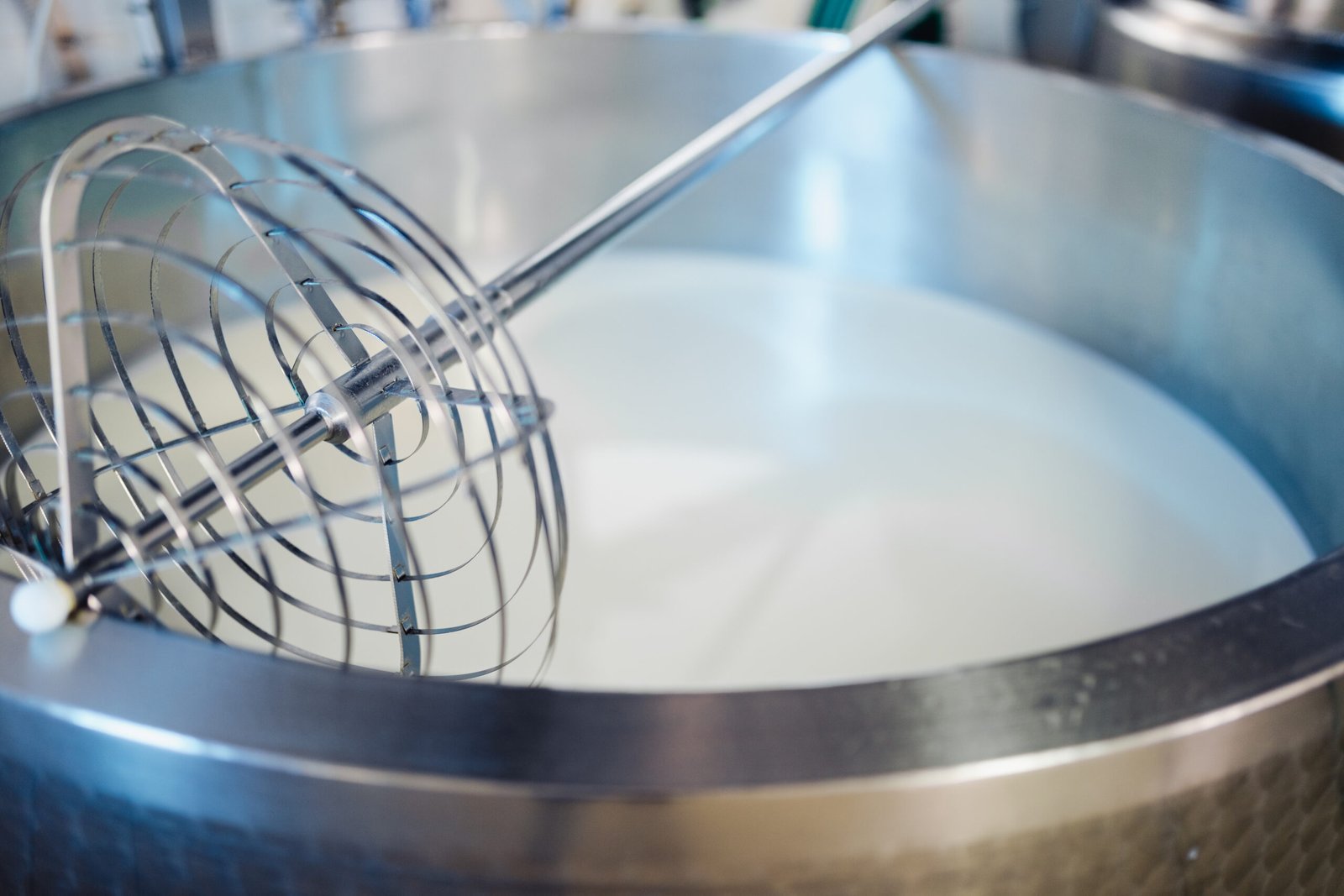
In emulsion polymerization, rheology control and colloidal stability define production success.
As a trusted cellulose‑ether manufacturer, LANDU delivers high‑purity Hydroxyethyl Cellulose (HEC) engineered specifically for emulsion‑polymer systems.
Our HEC ensures stable emulsions, smooth polymerization, and consistent final‑product quality — meeting the demanding standards of VAE, acrylic, styrene‑acrylic, and other water‑borne polymer emulsions worldwide.



 Technical Functions
Role of HEC in Emulsion Polymerization
During polymerization, HEC serves as both a protective colloid and a dynamic rheology modifier, enabling controlled particle growth and improved processing stability.

Protective Colloid Function

Thickening & Viscosity Control
Emulsion Stabilization

Improved Film‑Forming Behavior
Product Benefits
Advantages of LANDU® HEC for Polymer Manufacturers

High Biological Stability
Resists microbial degradation during processing and storage.
Excellent Enzyme Resistance
Minimizes viscosity loss and ensures long‑term consistency.
Superior Rheology Performance
Provides controlled flow, steady build‑up, and effective suspension.
Low Impurity Content
Improves polymerization reliability by reducing coagulum formation.
Broad System Compatibility
Optimized for VAE, pure acrylic, styrene‑acrylic, and vinyl acrylic.
Fast & Complete Dissolution
Lump‑free hydration for efficient processing.

 Product Selection
Recommended LANDU HEC Grades for Emulsion Polymerization
| Grade | Brookfield Viscosity (1 % / 2 %) |
Moisture (≤) |
Ash (≤) |
Particle Size | Key Features |
|---|---|---|---|---|---|
|
HE30
|
1,500 – 2,500 mPa·s | 6% | 5% |
98 % pass 80 mesh |
Stable viscosity profile and excellent protective colloid function |
 HE60
HE60
|
2,500 – 3,500 mPa·s | 6% | 5% |
98 % pass 80 mesh |
Strong suspension capacity and cost‑effective performance |
 HE100BE
|
3,500 – 5,000 mPa·s | 6% | 5% |
98 % pass 80 mesh |
High thickening grade offering maximum viscosity and stability |
 Custom viscosity grades and surface‑treated options available upon request.
 Application Areas
Applications of LANDU HEC in Emulsion Polymerization
VAE Emulsions
Vinyl Acetate‑Ethylene systems for adhesives and coatings

Pure Acrylic Emulsions
Architectural binders and high-performance coatings
Styrene‑Acrylic Systems
Vinyl‑acrylic formulations for diverse applications

Construction Binders
Adhesives and emulsion binders for building materials
Waterborne Latex
Resin emulsions for eco-friendly formulations
Compatible with both batch and semi‑continuous polymerization processes.
Why Partner With Us
Why Choose LANDU as Your HEC Partner
REACH & ISO Certified Manufacturing
Guaranteed compliance and safety for global distribution.
Advanced Process Control & Quality Assurance
Strict viscosity and purity monitoring for consistent batch results.
Expert Technical Support
Formulation assistance for VAE, acrylic, and styrene‑acrylic polymerization systems.
Reliable Global Supply
Efficient logistics via FedEx / DHL with fast delivery and documentation.


 Free Testing Program
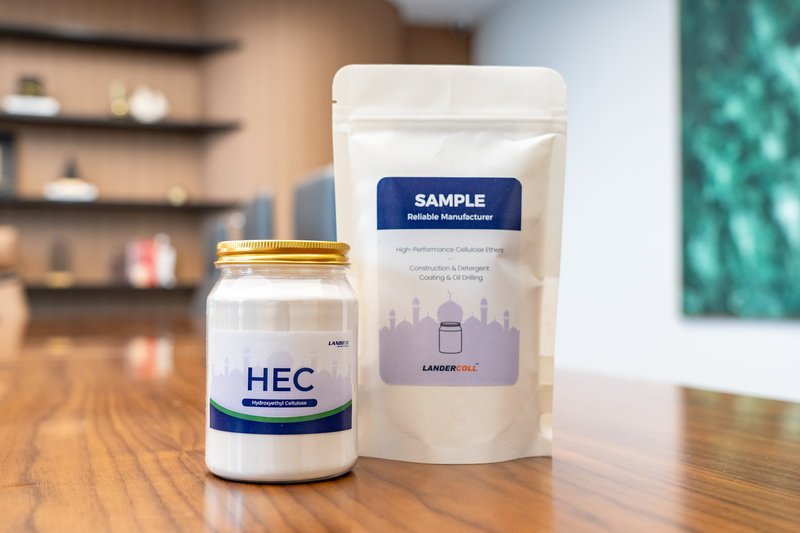
Request Free Sample & Technical Documentation
Experience the performance yourself — request a free sample kit including:
 Contact Us Now → Optimize Your Emulsion Polymerization with LANDU HEC
Our Promise
Contact Us Now → Optimize Your Emulsion Polymerization with LANDU HEC
Our Promise
LANDU HEC — Reliability in Every Reaction
From monomer dispersion to film formation, LANDU HEC ensures that your emulsions remain stable, uniform, and high‑performing.
Partner with us to develop smarter polymer formulations backed by trusted chemistry and expert technical support.
LANDU – Where Polymer Science Meets Precision.

 FAQ
FAQ
Frequently Asked Questions — LANDU® HEC for Emulsion Polymerization
What is the recommended dosage of HEC in emulsion polymerization?
+Typical dosage ranges from 0.1 – 0.8 % by total formulation weight, depending on desired viscosity, monomer type, and reactor design. For VAE and acrylic emulsions, a starting point of 0.3–0.5 % is generally sufficient to stabilize the system and control particle size distribution.
LANDU's application team can fine‑tune dosage based on your lab trials.
How should LANDU HEC be incorporated into an emulsion polymerization process?
+HEC is usually dissolved in deionized water to prepare a pre‑solution before adding to the reaction. For most systems:
 Charge cold or ambient water into a mix tank.
 Agitate slowly while sprinkling HEC powder.
 Allow full hydration (20–40 min) until clear.
 Introduce the solution into the reactor with monomers and surfactants.
This method ensures lump‑free dispersion and stable viscosity development.
Is LANDU HEC compatible with common initiators and surfactants?
+Yes. HEC is a nonionic polymer and shows excellent compatibility with standard water‑soluble initiators such as ammonium persulfate (APS), sodium bisulfite, and redox systems, as well as with most anionic, cationic, and nonionic surfactants.
It does not interfere with free‑radical polymerization or emulsion stability.
What is the pH and temperature stability of LANDU HEC during polymerization?
+LANDU HEC maintains stable viscosity and protective colloid function across pH 2 – 12 and temperatures up to 90 °C under normal reaction conditions.
It remains chemically inert and does not alter the polymer backbone or initiator efficiency.
Does HEC influence the final emulsion particle size or film properties?
+Yes — positively. HEC reduces particle agglomeration, leading to narrower particle size distribution and smoother film formation.
In downstream coating applications, this results in better flow, leveling, and film clarity without affecting gloss or adhesion.
What precautions are recommended to prevent microbial growth in HEC solutions?
+Although LANDU HEC has high biological stability and enzyme resistance, we recommend adding 0.05–0.2 % biocide or preservative to the aqueous solution if it will be stored for several days before use.
Maintain a closed tank and avoid extended exposure to warm, humid conditions.
How should HEC powder be stored to retain quality?
+Store in the original sealed bag under dry, cool conditions (≤ 35 °C, RH < 60 %). Keep away from moisture and direct sunlight.
When stored properly, LANDU HEC retains full performance for 24 months. After opening, reseal immediately to prevent moisture absorption.
Can LANDU provide customized HEC grades for specific polymerization systems?
+Absolutely. We develop tailor‑made HEC grades with modified viscosity, particle size, or surface treatment to suit high‑shear reactors, fast‑feed emulsion processes, or low‑temperature polymerizations.
Our R&D lab offers pilot‑testing and rheology simulation support for custom projects.
Are free samples and technical documents available for evaluation?
+Yes. LANDU offers free samples of HE30BE, HE60, and HE100 grades along with TDS, MSDS, and COA files.
Sample kits ship worldwide via FedEx or DHL — no fees or obligations. Our technical team can provide starting formulations and processing recommendations.

 English
  Arabic
  Bulgarian
  Czech
Czech  Danish
  Dutch
Dutch  Estonian
  Finnish
  French
  German
  Greek
Greek  Hungarian
  Indonesian
  Italian
  Japanese
  Korean
  Latvian
  Lithuanian
  Norwegian
  Portuguese (Portugal)
  Portuguese (Brazil)
  Romanian
  Russian
  Slovak
  Slovenian
  Spanish (Spain)
  Spanish (Mexico)
  Swedish
  Turkish
  Ukrainian