 Oil Drilling Solutions
Landercoll® HEC for Oil Drilling Industry
High-Performance Hydroxyethyl Cellulose for Drilling Fluids and Oilfield Engineering
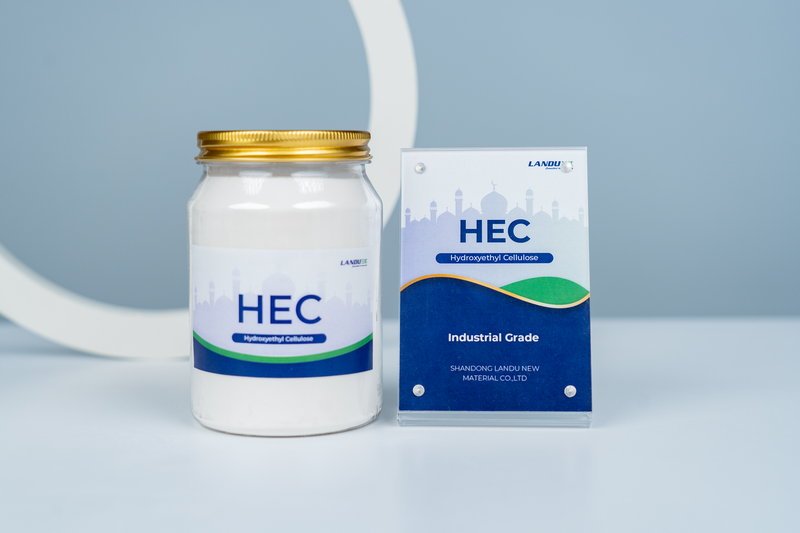
Landercoll® Hydroxyethyl Cellulose (HEC) from LANDU is a premium-grade non-ionic, water-soluble polymer widely applied in oilfield drilling, completion, and workover fluids.
With outstanding rheology control, fluid loss reduction, salt and temperature tolerance, it ensures safe, efficient, and economically sustainable drilling operations—even in harsh and deep-well conditions.

Produced under strict ISO and API-compliant standards, Landercoll® HEC provides consistent quality, fast dissolution, and excellent compatibility with a broad range of water-based and brine-based drilling fluid systems.

 Why Choose Us
Why Choose Landercoll® HEC for Oil Drilling?
 1
1
Powerful Thickening & Suspension
Landercoll® HEC offers balanced viscosity development for both freshwater and saturated saltwater systems, effectively suspending drill cuttings, weighting material (e.g., barite, hematite), and improving hole-cleaning efficiency.
2
Outstanding Salt & Electrolyte Tolerance
Unlike many natural polymers, Landercoll® HEC maintains stable viscosity even in brine or high-electrolyte environments containing NaCl, KCl, CaCl₂, or CaBr₂.
3
Improved Lubrication & Wear Reduction
By forming a lubricating film on the drill string and wellbore surface, Landercoll® HEC reduces friction, torque, and drag—lowering bit wear and enhancing rate of penetration (ROP).
 4
4
Fluid Loss & Filtration Control
HEC forms a uniform, low-permeability filter cake, minimizing water loss to the formation and preventing differential sticking.
This improves wellbore integrity, particularly in reactive shale and unstable formations.
5
Reliable Under Extreme Conditions
Performs effectively in deep wells, high-density mud systems, and high-temperature formations.
6
Environmentally Friendly
Landercoll® HEC is biodegradable and non-toxic, meeting environmental regulations for onshore and offshore drilling operations.
 Key Benefits
Key Benefits in Drilling Operations
Using Landercoll® HEC helps operators achieve:

Higher drilling speed through improved hole cleaning efficiency

Reduced frictional heat and torque

Extended lifespan of bits, pipes, and downhole tools

Greater shale stability and prevention of wellbore collapse

Better control of fluid rheology under varying temperature and salinity conditions

Lower total mud cost through stable performance and reduced additive dosage
 Product Range
Product Range – Landercoll® HEC Grades for Oilfield Applications
To meet different drilling fluid demands, LANDU provides multiple HEC grades, each optimized through precise substitution and viscosity control:
| Product Grade | Viscosity Range (2% Soln., mPa·s, 25°C) |
Typical Applications |
|---|---|---|
| HEC-HV High Viscosity | 60,000 – 100,000 | Maximum thickening and suspension power for high-density and deep-well drilling muds |
| HEC-MV Medium Viscosity | 25,000 – 60,000 | Balanced rheology modifier for general drilling and completion fluids |
| HEC-LV Low Viscosity | 10,000 – 25,000 | Fluid-loss control agent and thinner additive for lightweight mud systems |
All grades feature:

Customized formulations and OEM supply available upon project request.
 Functional Mechanism
Functional Mechanism – How Landercoll® HEC Works in Drilling Fluids
Rheology & Thickening
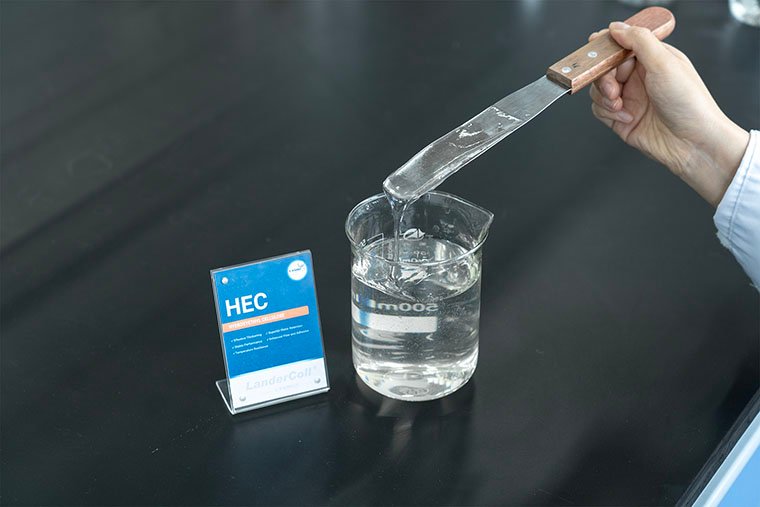
HEC molecules hydrate and form a 3D polymer network that increases water viscosity and regulates shear-thinning behavior, ensuring ideal fluid flow at varying shear rates.
Suspension & Stability
Viscous and elastic properties stabilize suspended solids (cuttings, weighting materials), allowing reliable hole cleaning and preventing settling even during flow interruptions.
Fluid Loss Control
HEC efficiently seals permeable formations by forming a tight, slick film, minimizing filtrate invasion and preventing formation damage.
Lubrication & Film Formation
A thin HEC film coats the wellbore and drilling tools, reducing drag and friction coefficients, while also improving corrosion protection under brine environments.
Salt-Resistant Viscosity Retention
Landercoll® HEC retains up to 90% of its original viscosity even in saturated brines or multi-valent salt conditions, ensuring stable mud rheology where other polymers fail.

 Performance Comparison
Performance Advantages vs. Other Polymers
| Feature | Landercoll® HEC | XC Polymer (Xanthan Gum) |
CMC (Carboxymethyl Cellulose) |
|---|---|---|---|
| Salt Tolerance | |||
| Temperature Resistance | |||
| Lubrication | |||
| Filtration Control | |||
| Cost Efficiency | |||
| Biodegradability |
 Usage Guide
Recommended Usage & Mixing Instructions

Hydration Guide:
Fill the mixing tank with clean water or brine.
Begin gentle agitation.
Slowly add Landercoll® HEC (avoid clumping) – typically up to 100 kg per 15 minutes depending on mud volume.
Adjust pH to 8–9 using NaOH (avoid in CaCl₂ or CaBr₂ systems).
Continue mixing until fully hydrated and uniform.

Dosage Reference:

Note: Dosage should be optimized according to desired rheology and wellbore conditions.
Packaging & Storage
Packaging & Storage
Packaging
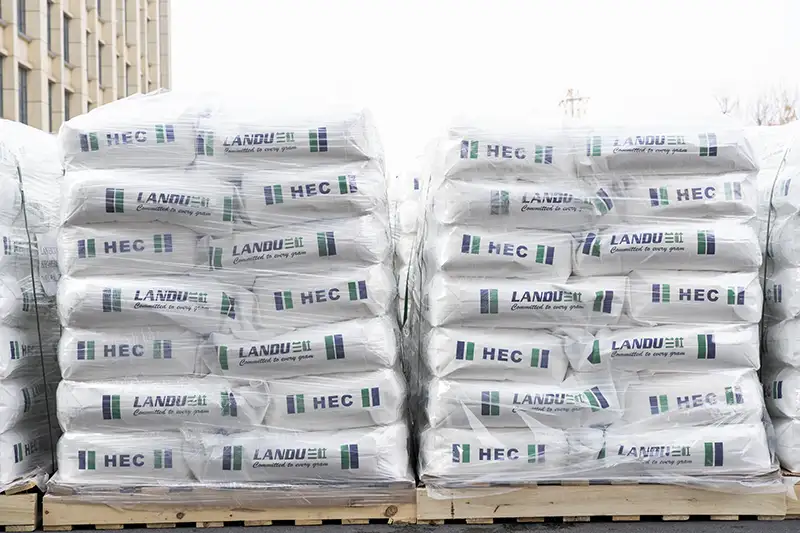
25 kg multi-layer paper bags with inner PE lining

Storage
Store in a cool, dry, ventilated area
Protection
Protect from moisture and direct sunlight

Shelf Life
24 months (under recommended conditions)
 Why Partner with Us
Why Partner with LANDU – Your Reliable Oilfield Additive Expert

Leading cellulose ether manufacturer with advanced MVR and DCS-controlled production lines
Strict quality control from raw material inspection to final packaging

Supplying 60+ countries across Asia, the Middle East, and the Americas
Complete documentation: COA, MSDS, TDS, and API-compliant data sheets available

Technical support team offering field guidance, laboratory analysis, and customization assistance
OEM and bulk supply options to meet specific drilling project requirements
LANDU works closely with drilling contractors and mud service companies to help optimize fluid efficiency, cost-effectiveness, and wellbore stability.


 Free Consultation
Request Free Samples & Technical Consultation
Experience how Landercoll® HEC can improve your drilling operations—enhancing viscosity control, cutting suspension, and fluid loss prevention.
Free sample evaluation
Engineering-level technical support
Tailored product recommendations
 FAQs
FAQs
Frequently Asked Questions
How should HEC be added to the drilling fluid?
Add HEC slowly into circulating water or brine while stirring continuously. Pre-wetting with a small amount of diesel or mild surfactant water helps avoid agglomeration. Full hydration may take 20–30 minutes depending on temperature and grade.
Is Landercoll® HEC suitable for both freshwater and saltwater systems?
Yes. HEC performs reliably in freshwater, seawater, and saturated brine drilling fluids.
Does HEC affect mud pH or chemistry?
No significant effect. It is non-ionic and maintains chemical neutrality, allowing wide compatibility with common mud additives.
What are common oilfield additives used with HEC?
Bentonite, barite, lubricants, fluid-loss reducers, defoamers, surfactants, shale inhibitors, and salt stabilizers are typically used together in synthetic or semi-synthetic mud systems.
Is HEC biodegradable?
Yes. Landercoll® HEC is biodegradable and non-toxic, compliant with regulations for environmentally responsible drilling operations.
 English
  Arabic
  Bulgarian
  Czech
Czech  Danish
  Dutch
Dutch  Estonian
  Finnish
  French
  German
  Greek
Greek  Hungarian
  Indonesian
  Italian
  Japanese
  Korean
  Latvian
  Lithuanian
  Norwegian
  Portuguese (Portugal)
  Portuguese (Brazil)
  Romanian
  Russian
  Slovak
  Slovenian
  Spanish (Spain)
  Spanish (Mexico)
  Swedish
  Turkish
  Ukrainian